
The Black Streaks on Your Roof Aren’t Dirt
How a microscopic bacteria is eating the limestone out of your shingles and forcing you into a massive roof replacement years before you actually need one.
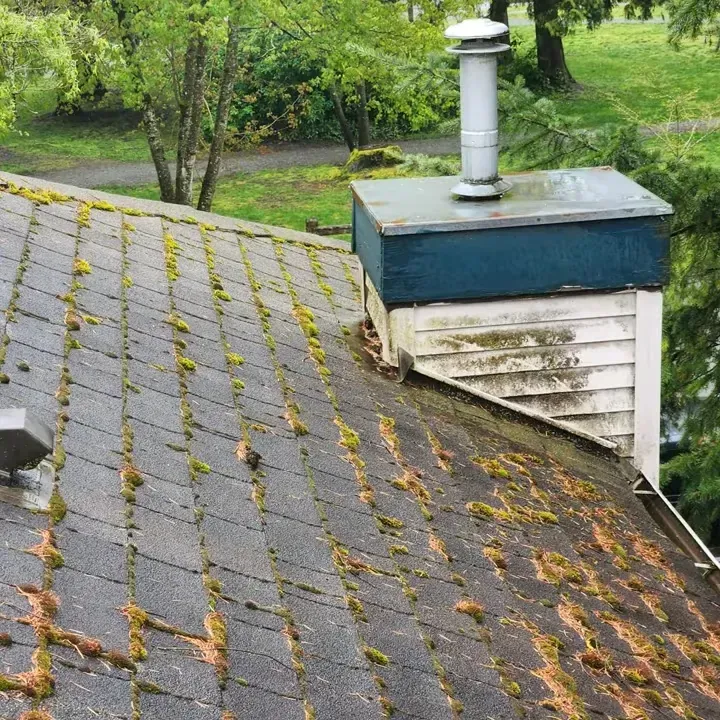
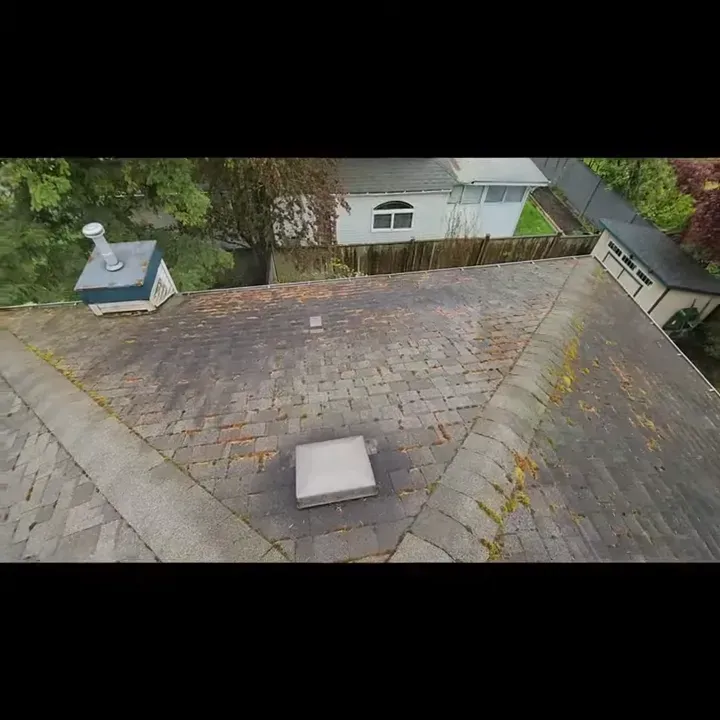
You are standing in your driveway looking up at your roof, and you notice dark, ugly black streaks running down the shingles. Usually, it's worse on the north-facing side or under heavy tree shade.
Most homeowners assume it's dirt, exhaust soot, or sap from nearby trees. It isn’t.
Those black streaks are an active, living bacterial infection called Gloeocapsa Magma, and it is literally eating your roof. If you ignore it, you are going to be paying for a massive roof replacement years before you should have to.
What is Gloeocapsa Magma?
Gloeocapsa Magma is a type of cyanobacteria (blue-green algae) that travels through the air as microscopic spores. When the wind blows these spores onto your roof, they look for a hospitable environment to take root.
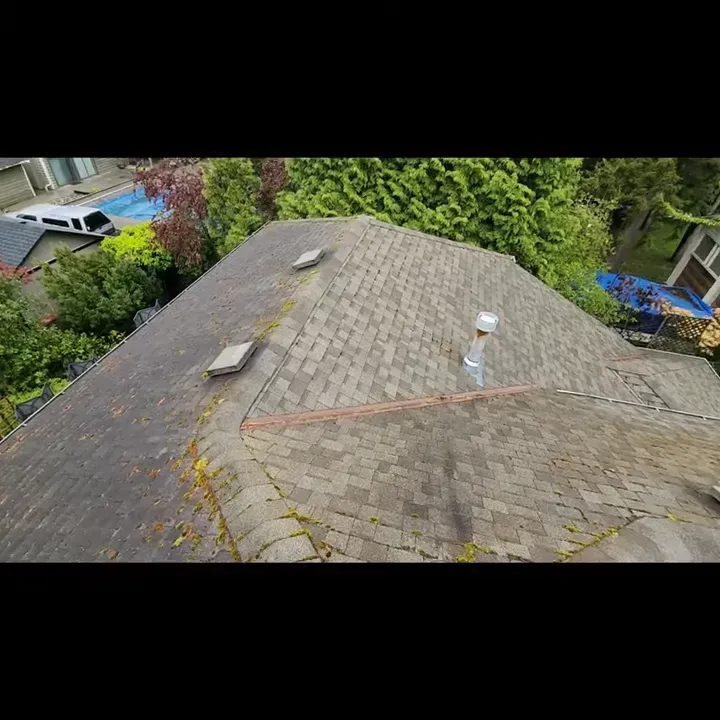
They thrive in areas with high moisture and limited direct sunlight, which is why you almost always see the black streaks forming on the north or west sides of your house, or under the heavy, mature tree canopies in neighborhoods like River Heights and Linden Woods.
The dark black color you see isn't actually the bacteria itself. As the bacteria colony grows, it develops a dark, hard UV-protective shell to shield itself from the sun. That black shell is what stains your house.
Why is it on My Roof? (The Limestone Buffet)
Decades ago, asphalt shingles were manufactured using an asphalt-saturated felt or organic paper base. But as manufacturing costs rose, the roofing industry shifted to fiberglass shingles. To give these modern shingles weight and bulk, manufacturers began mixing crushed limestone into the asphalt.
Limestone is incredibly cheap and effective for manufacturing, but there is one massive flaw: Gloeocapsa Magma feeds on limestone.
Your roof is essentially an all-you-can-eat buffet for this bacteria. The spores land on the shingles, root into the asphalt, and begin actively consuming the limestone filler holding the shingle together.
The Mechanical Threat: How It Destroys Your Home
This isn't just a cosmetic issue that hurts your curb appeal. Gloeocapsa Magma causes severe mechanical degradation to your building envelope.
Granule Loss:
As the bacteria eats the limestone, the structural integrity of the shingle breaks down. The protective UV granules on the surface of your shingles detach and wash away into your gutters. Without those granules, the raw asphalt bakes in the sun, dries out, and cracks.
Spiking Cooling Bills:
Those black bacterial shells absorb massive amounts of heat. A badly infected roof loses its ability to reflect sunlight, turning your attic into an oven during a Winnipeg summer and forcing your air conditioner to work overtime.
Inviting Moss and Lichen:
The bacteria creates a root system that holds moisture against the roof. This creates the perfect breeding ground for thicker, more destructive organisms like moss and lichen, which will literally lift your shingles off the deck and cause interior leaks.
The DIY Disaster: Why You Should Never Pressure Wash a Roof
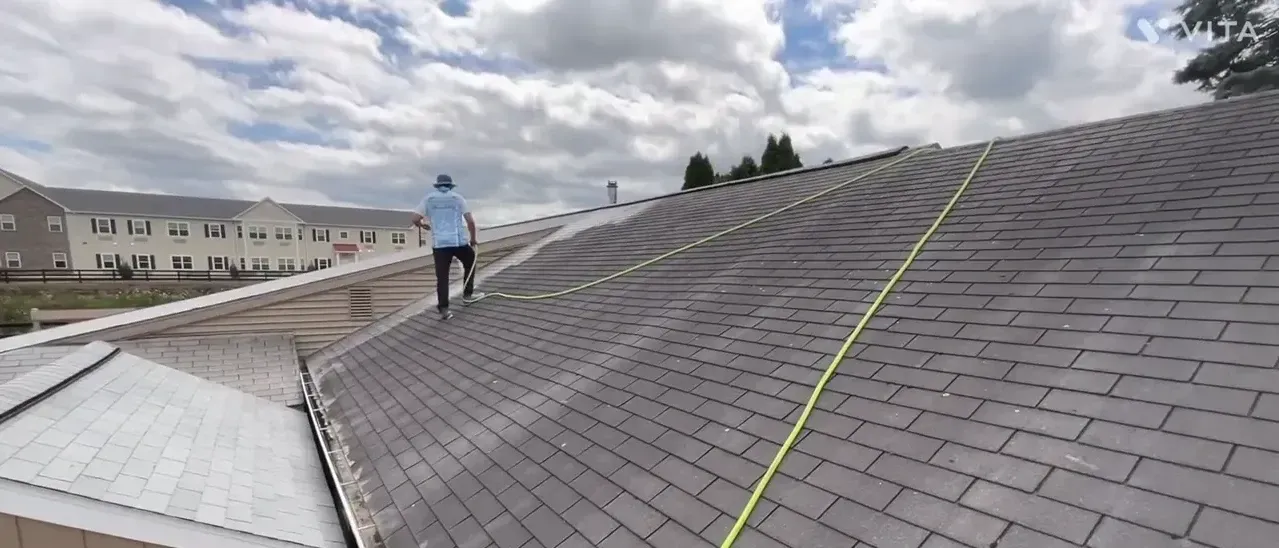
When homeowners finally notice the black streaks, their first instinct is to drag a pressure washer up a ladder and blast it off.
Doing this will destroy your roof faster than the bacteria ever could.
High-pressure water instantly shears the protective granules right off the asphalt. You might wash the black stains away, but you are leaving the roof completely exposed to the elements, guaranteeing premature failure and instantly voiding your manufacturer's warranty.
Furthermore, pressure washing just shears the top off the bacteria—it leaves the root system embedded in the shingles, meaning the black streaks will grow back in a matter of months.
The Professional Solution: Chemistry, Not Force
At 204 Pressure Washing, we don't use brute force to clean a roof. We use specialized chemistry.
We utilize a Low-Pressure Soft Wash system. We apply a targeted, biodegradable surfactant blended with a neutralizing agent directly to the shingles. This chemical solution dwells on the surface and seeps deep into the pores of the asphalt, chemically dissolving the Gloeocapsa Magma root system and neutralizing the bacteria at the source.
We apply this treatment at roughly 60 PSI—the exact same pressure as a standard garden hose. It completely eradicates the black streaks and restores the original color of your roof without dislodging a single protective granule.
If your roof is showing signs of a bacterial infection, don't wait for the shingles to crack and fail.
Learn more about our professional Roof Cleaning & Moss Removal services here.