Graffiti Removal & Exterior Restoration in Winnipeg
At a Glance
- Who: 204 Pressure Washing.
- What: Commercial and residential graffiti removal, chemical paint stripping, and sacrificial anti-graffiti coatings.
- Where: Serving all of Winnipeg, specifically targeting high-risk zones like the West End, Osborne Village, and the Exchange District.
- The Bottom Line:We never use destructive sandblasters or high pressure. We use specialized masonry solvents and 200°F hot water to chemically lift spray paint pigments out of porous brick and Tyndall stone. High-pressure washing just blows out mortar joints and drives paint resins deeper to create permanent, unfixable "ghosting" shadows.
Why High Pressure Fails on Graffiti
Blasting a tagged wall with cold water is the fastest way to permanently ruin a building. The real problem isn't just the paint on the surface, it is binder resin and pigment migration.
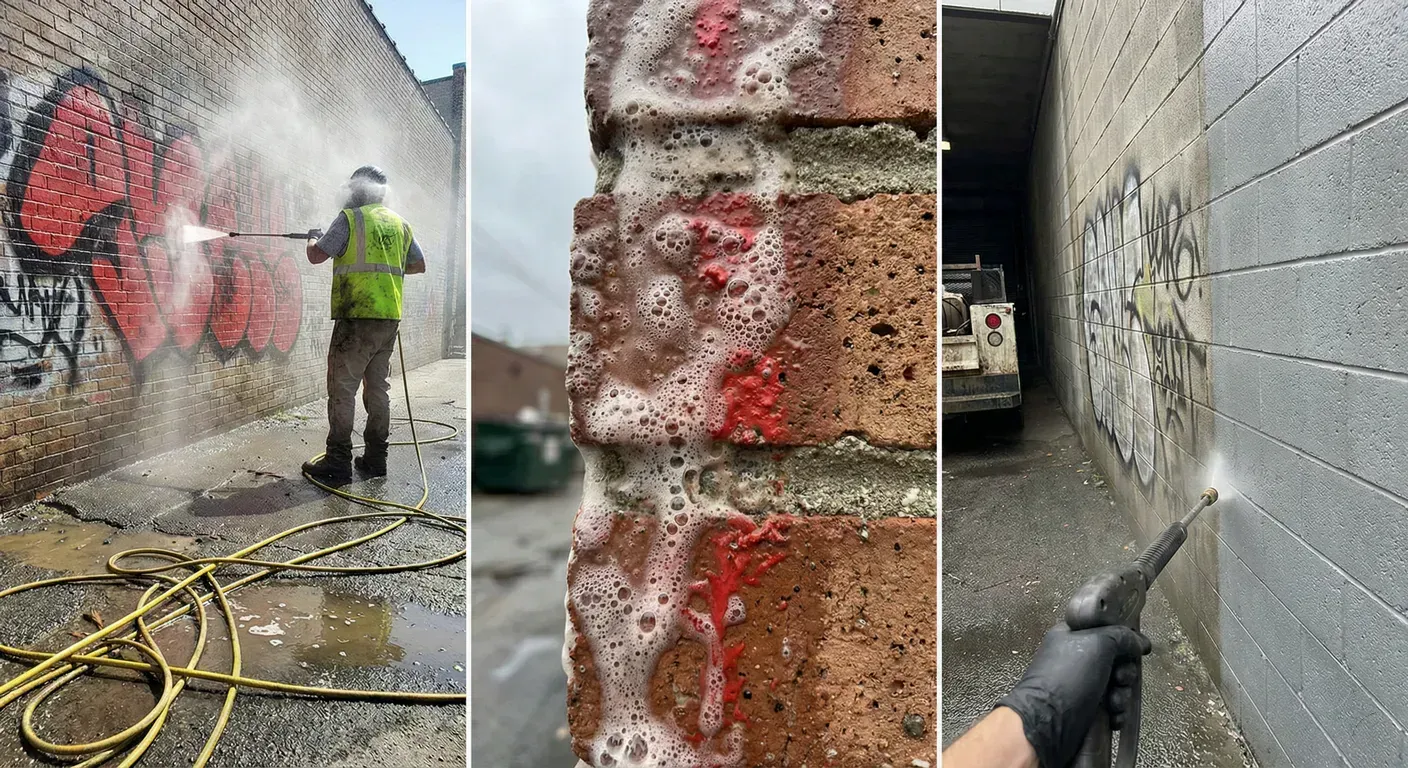
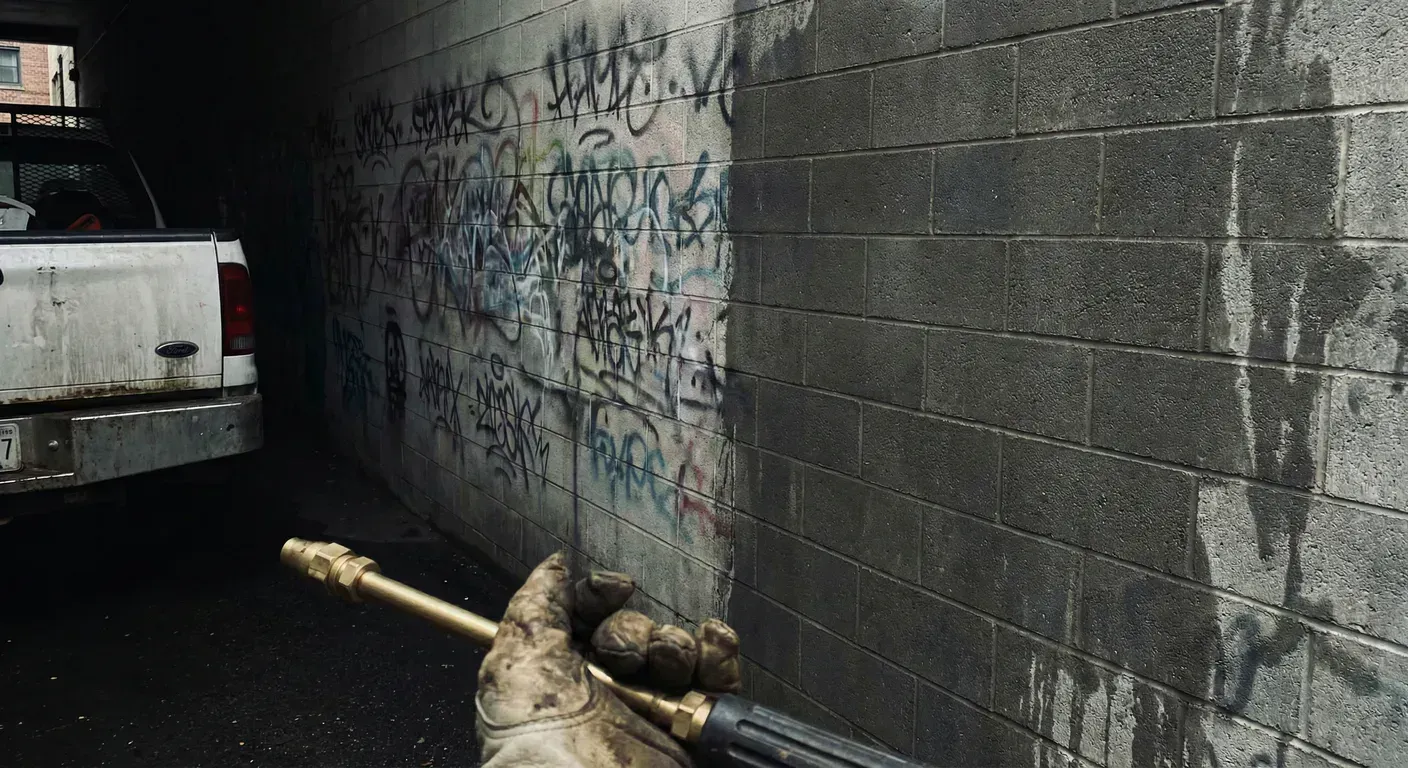
When taggers hit highly porous surfaces like our local Tyndall stone or heritage red brick, the solvents in the spray paint naturally carry the pigments deep into the masonry pores. If you blast this tag with cold water and high pressure (the standard DIY approach), you forcefully drive those pigments even deeper into the stone. This creates a permanent shadow called "ghosting" that can never be removed. Furthermore, aggressive high pressure will instantly blow out historic mortar joints, leaving you with an incredibly expensive masonry repointing bill.
The Chemical Restoration Process
At 204 Pressure Washing, we rely on chemistry, not brute force.
List of Services
-
Solvent Dwell:Item Link List Item 1
We apply a professional-grade masonry stripper designed to actively break down the synthetic resins holding the spray paint to the stone.
-
Agitation:Item Link List Item 2
We manually scrub the surface to lift the dissolved paint out of the pores rather than pushing it further in.
-
Hot Water Rinse:Item Link List Item 3
We use high-volume, extremely low-pressure hot water (200°F) to gently flush the dissolved paint and resins off the wall.
-
Shadow Removal:Item Link List Item 4
If any "ghosting" remains deep in the pores, we apply specialized alkaline cleaners and acidic neutralizers to restore the exact pH balance of the wall and aggressively pull the absolute last bit of pigment out of the stone.
The Freeze-Thaw Structural Risk
In Winnipeg, a graffiti tag isn't just an eyesore; it is a structural threat. Spray paint on porous brick creates an accidental, waterproof moisture barrier.
When ground moisture gets trapped inside the masonry behind that layer of paint and freezes in November, it expands. This violent expansion leads to spalling, where the entire face of the brick literally pops off and falls to the ground. We see this constant structural failure in older neighborhoods like the West End and Osborne Village. Removing the paint correctly with chemical solvents lets the wall breathe and prevents long-term decay.
Whether you manage a property near The Forks or a retail storefront on Portage Avenue, a DIY removal attempt is too expensive to risk. Using a pressure washer on frozen or cold masonry causes ice damming inside the brick, leaving a physical scar that looks far worse than the tag itself.
Surface Restoration & Protection Services
We safely strip spray paint, markers, and adhesives from limestone, stucco, vinyl siding, glass, and metal.
- Masonry Restoration: Safe, low-pressure chemical removal methods for restoring heritage brick, block, and Tyndall stone.
- Metal & Glass Polishing: Specialist techniques for removing highly destructive acid etching and paint tags from non-porous storefront surfaces.
- Sacrificial Anti-Graffiti Coatings: We apply invisible, wax-based barriers to highly targeted walls. If your building gets tagged again, this sacrificial coating allows us (or your maintenance team) to literally melt the tag and the coating off with simple hot water.
- Phone: 431-804-7997
- Email: 204pressurewashing@gmail.com
- Serving: All Winnipeg locations and surrounding communities.
Frequently Asked Questions
Can you remove graffiti from brick?
Yes, we apply a masonry-safe solvent that breaks down the paint, then rinse it with low-pressure hot water. Scrubbing brick with wire brushes is avoided as it leaves permanent scars.
Does the "shadow" remain?
No, if treated correctly. If a pigment shadow remains in the pores, we apply a "poultice" or a secondary masonry cleaner to draw the remaining color out of the stone.
Can you remove spray paint in -20C?
No, the chemical strippers will freeze and become ineffective. The surface temperature typically needs to be above freezing for the chemical reaction to dissolve the paint.
Will removal damage the paint underneath?
Yes, if the graffiti is on a painted surface. The solvents that dissolve spray paint will also dissolve the wall paint. We may need to repaint that section or color-match the removal area.
Can you remove marker tags from glass?
Yes, usually without scratching. We use solvents that liquefy the ink, allowing us to wipe it away. Using abrasives on glass is dangerous and can leave permanent haze.
Is sandblasting necessary?
No, wet abrasive blasting is a last resort. We prefer chemical stripping because it preserves the original texture of the brick or concrete, whereas blasting removes the surface layer entirely.
Do you apply anti-graffiti coating?
Yes, we can apply a sacrificial wax coating. If the wall is tagged again, we simply wash off the wax (taking the paint with it) and re-apply, protecting the expensive masonry beneath.